
(PRP) Hair Treatment
Platelet rich plasma (PRP)
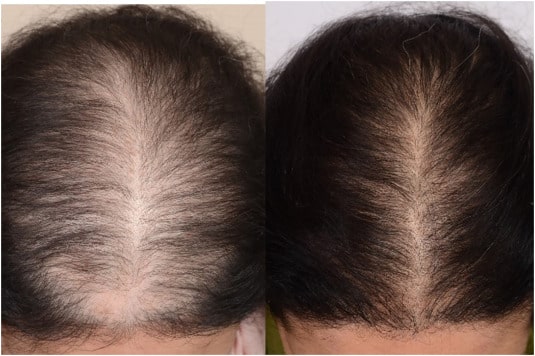
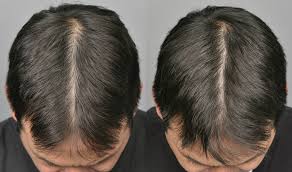
Platelet rich plasma (PRP) was described as a small volume of plasma containing higher concentrations of platelets than those found in peripheral blood and initially used as a transfusion product for treatment of thrombocytopenia. To date, it was discovered that there are several growth factors and cytokines that can accelerate wound healing and tissue regeneration, leading to a wider range of applications in the medical field, such as in sport medicine, regenerative medicine, and aesthetic medicine. Several studies have shown that PRP can be used effectively for treatment of hair loss.
Although it has been widely used, the exact mechanism of action of PRP is still not fully elucidated. In this article, we aim to review and update current information on the definition, classification, mechanism of action, clinical efficacy in hair regrowth, and adverse events of PRP.
Introduction
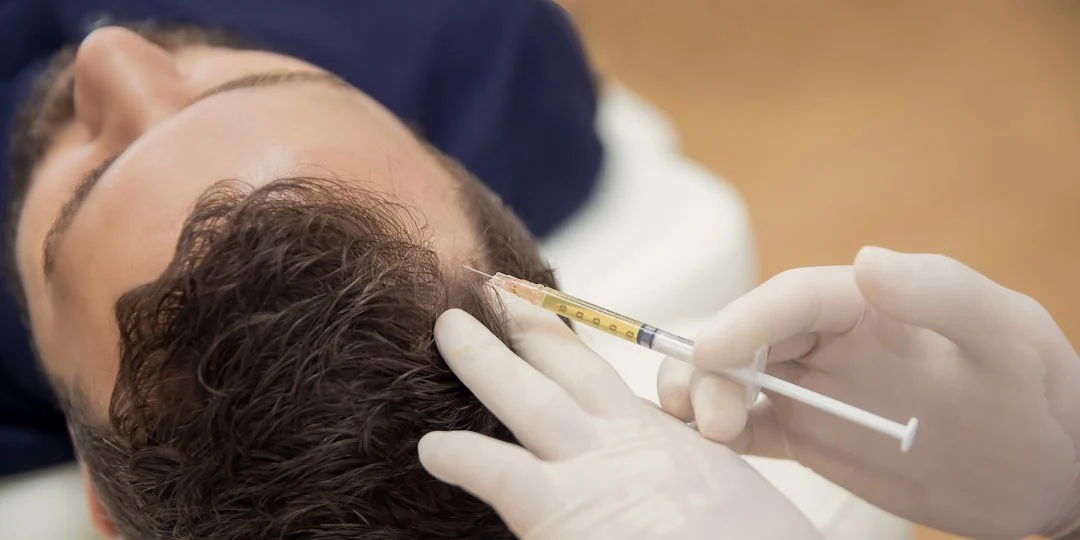
Platelet rich plasma (PRP) was first described in Hematology as a small volume of plasma containing higher concentrations of platelets than those found in peripheral blood and initially used as a transfusion product for treatment of thrombocytopenia since 1970.1 Nowadays, PRP has become a popular treatment for many conditions in sport medicine,2 regenerative medicine,2,3 aesthetic medicine4 and hair loss treatment5,6 as it contains a variety number of growth factors and cytokines that can accelerate wound healing and tissue restoration.
Both the device used to separate platelets and the subsequent use of the PRP product fall under the regulation of the US Food and Drug Administration (FDA).7 Any use of PRP other than blood transfusion is an “off label use” which is not prohibited by the FDA regulation if performed by a physician with the intent to practice medicine. Despite its widely application, the mechanism underlying the hair regrowth effects of PRP remains to be fully explored.
Classification of Platelet Rich Plasma
There are many variations in PRP preparations, from the type of collection tubes, power used, the number of cycles and the duration of centrifugation, components of PRP and an activation method was applied. A standardized classification of PRP called DEPA was proposed by Magalon et al, based on four components: dose of injected platelets (baseline concentration of platelets at 200×109/L), efficiency of the process (platelet recovery rate %), purity of PRP (relative composition in platelets %) and activation process,14 as shown in Table 1.
From this classification, an “AAA” DEPA score is referred to a high-concentration platelet injection (>5 billion) with minimal red blood cell contamination and well prepared with a proper method resulting in minor loss of platelets from whole blood. The last category in the DEPA classification is reporting the presence or absence of any exogenous activator, such as thrombin or calcium chloride.
Make an Appointment
Magnam dolores commodi suscipit. Necessitatibus eius consequatur ex aliquid fuga eum quidem. Sit sint consectetur velit. Quisquam quos quisquam cupiditate. Et nemo qui impedit suscipit alias ea. Quia fugiat sit in iste officiis commodi quidem hic quas.
Frequently Asked Questions
Magnam dolores commodi suscipit. Necessitatibus eius consequatur ex aliquid fuga eum quidem. Sit sint consectetur velit. Quisquam quos quisquam cupiditate. Et nemo qui impedit suscipit alias ea. Quia fugiat sit in iste officiis commodi quidem hic quas.
-
Non consectetur a erat nam at lectus urna duis?
Feugiat pretium nibh ipsum consequat. Tempus iaculis urna id volutpat lacus laoreet non curabitur gravida. Venenatis lectus magna fringilla urna porttitor rhoncus dolor purus non.
-
Feugiat scelerisque varius morbi enim nunc?
Dolor sit amet consectetur adipiscing elit pellentesque habitant morbi. Id interdum velit laoreet id donec ultrices. Fringilla phasellus faucibus scelerisque eleifend donec pretium. Est pellentesque elit ullamcorper dignissim. Mauris ultrices eros in cursus turpis massa tincidunt dui.
-
Dolor sit amet consectetur adipiscing elit?
Eleifend mi in nulla posuere sollicitudin aliquam ultrices sagittis orci. Faucibus pulvinar elementum integer enim. Sem nulla pharetra diam sit amet nisl suscipit. Rutrum tellus pellentesque eu tincidunt. Lectus urna duis convallis convallis tellus. Urna molestie at elementum eu facilisis sed odio morbi quis
-
Tempus quam pellentesque nec nam aliquam sem et tortor consequat?
Molestie a iaculis at erat pellentesque adipiscing commodo. Dignissim suspendisse in est ante in. Nunc vel risus commodo viverra maecenas accumsan. Sit amet nisl suscipit adipiscing bibendum est. Purus gravida quis blandit turpis cursus in.
-
Tortor vitae purus faucibus ornare. Varius vel pharetra vel turpis nunc eget lorem dolor?
Laoreet sit amet cursus sit amet dictum sit amet justo. Mauris vitae ultricies leo integer malesuada nunc vel. Tincidunt eget nullam non nisi est sit amet. Turpis nunc eget lorem dolor sed. Ut venenatis tellus in metus vulputate eu scelerisque.
Patient Reviews

Saul Goodman
Ceo & Founder
Proin iaculis purus consequat sem cure digni ssim donec porttitora entum suscipit rhoncus. Accusantium quam, ultricies eget id, aliquam eget nibh et. Maecen aliquam, risus at semper.

Sara Wilsson
Designer
Export tempor illum tamen malis malis eram quae irure esse labore quem cillum quid cillum eram malis quorum velit fore eram velit sunt aliqua noster fugiat irure amet legam anim culpa.

Jena Karlis
Store Owner
Enim nisi quem export duis labore cillum quae magna enim sint quorum nulla quem veniam duis minim tempor labore quem eram duis noster aute amet eram fore quis sint minim.

Matt Brandon
Freelancer
Fugiat enim eram quae cillum dolore dolor amet nulla culpa multos export minim fugiat minim velit minim dolor enim duis veniam ipsum anim magna sunt elit fore quem dolore labore illum veniam.

John Larson
Entrepreneur
Quis quorum aliqua sint quem legam fore sunt eram irure aliqua veniam tempor noster veniam enim culpa labore duis sunt culpa nulla illum cillum fugiat legam esse veniam culpa fore nisi cillum quid.